Wondering whether a townhome or condo in Coralville is the right fit for your next move? You are not alone. Many buyers want a home that feels easier to manage, stays close to daily conveniences, and still offers the benefits of ownership. This guide will help you understand how attached housing works in Coralville, what to review before you buy, and how to choose the option that fits your lifestyle. Let’s dive in.
Why attached living stands out in Coralville
Coralville is closely connected to Iowa City and is known by the city as a pedestrian- and bike-friendly community. Local planning also emphasizes walkability, mixed-use areas, and a blend of residential, retail, office, and recreation uses. That helps explain why many townhomes and condos are located near activity centers and commercial corridors.
For buyers, that often means easier access to shopping, dining, parks, and major routes. It can also mean a different day-to-day experience than a detached home on a larger lot. If you want convenience and a lower-maintenance setup, attached living may be worth a serious look.
Townhome vs condo in Coralville
A lot of buyers use the words townhome and condo as if they mean the same thing. In Coralville, they often describe different things. The word townhome usually refers to the building style, while condo refers more directly to the legal ownership structure.
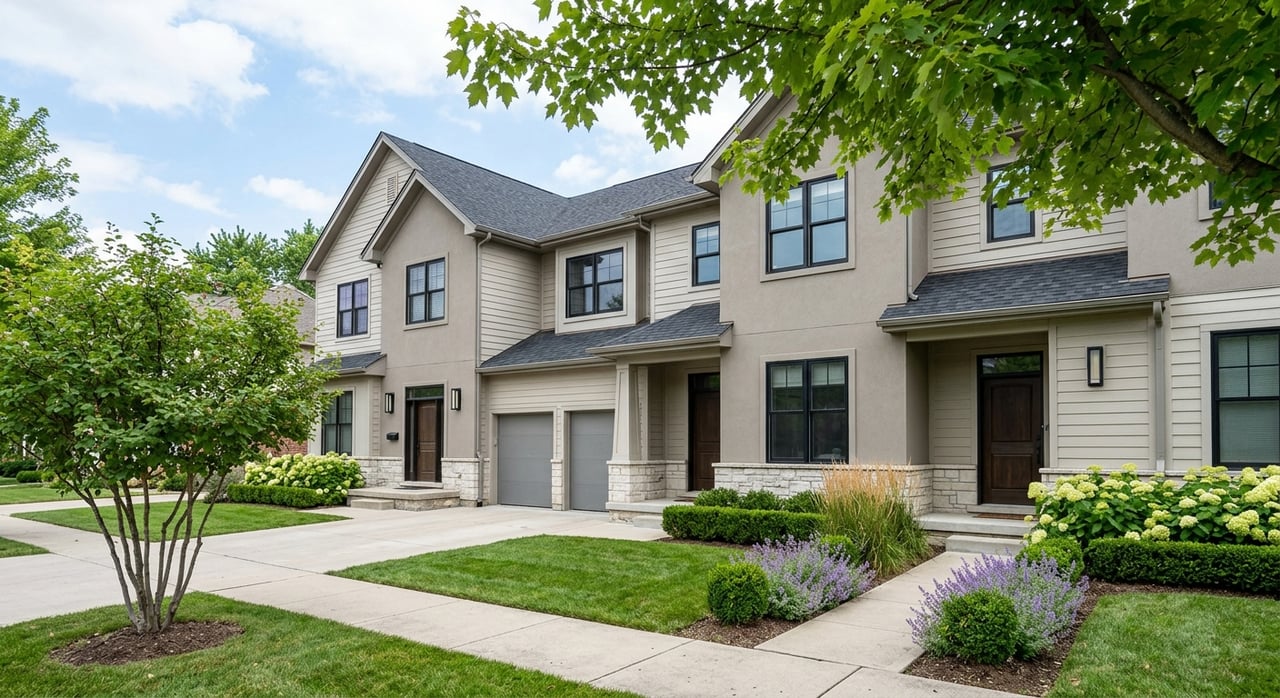
Coralville planning documents describe townhomes or rowhouses as horizontally attached homes. Condominiums can include homes attached vertically, horizontally, or both. The most important point is that the deed and governing documents determine what you are buying, not just how the property looks from the street.
What a condo means legally in Iowa
Under Iowa’s Horizontal Property Act, a condominium unit is a separate parcel of real property. That unit also comes with an appurtenant share of the common elements.
Common elements can include items such as:
- The land
- Foundations
- Exterior walls
- Roofs
- Halls and stairways
- Elevators
- Central utility systems
That structure matters because ownership is shared in some areas and individual in others. Before you buy, you need to know exactly where your ownership starts and stops.
What a townhome may mean legally
A townhome can be part of a planned community or HOA rather than a condominium regime. Iowa common-interest-community law covers situations where ownership of a unit requires you to pay a share of taxes, insurance, maintenance, improvements, or related expenses.
In practical terms, two homes that look nearly identical from the outside may have very different ownership rules. One may be fee-simple with an HOA, while the other may be a condominium unit with a condo declaration. That is why reviewing the legal documents early is so important.
What you are really buying
When you buy a Coralville condo or townhome, you are buying more than square footage. You are also buying into a set of shared obligations, rules, and maintenance responsibilities. Those details can shape your monthly costs and your long-term experience in the home.
For condos in Iowa, the declaration must describe the land, building, unit location, common elements, and each unit’s percentage interest. Deeds must also show the unit’s undivided interest in the common areas and facilities. If you are unsure about a patio, parking area, storage space, or yard area, do not assume it is exclusively yours without documentation.
Pay close attention to limited common elements
Limited common elements are especially important in attached housing. Under Iowa condo law, these are areas reserved for the use of one or more units to the exclusion of others.
Examples may include:
- A patio
- A balcony
- A garage space
- A storage area
- A designated parking space
These spaces may feel private, but the legal treatment can differ from full ownership. Your documents should clearly explain what is included.
Maintenance and dues: what to verify first
One of the biggest reasons buyers choose townhomes and condos is lower day-to-day upkeep. In many communities, the association handles some common-area maintenance and collects shared expenses. That can make life simpler, but you should never assume what is covered.
The exact split depends on the declaration and bylaws. Before you move forward, confirm who handles major items and whether those duties belong to the association or the owner.
Questions to ask about maintenance
Ask for clear answers on:
- Roof maintenance and replacement
- Siding and exterior surfaces
- Snow removal
- Landscaping
- Windows
- Decks or patios
- Mechanical systems
- Insurance responsibilities
This step can prevent expensive surprises later. A lower-maintenance home is only lower-maintenance if the documents actually support that expectation.
Association records every buyer should review
In Iowa, condo bylaws must address administration, board meetings, notice, recordkeeping, maintenance and repair of common areas, and how common expenses are collected. If there is a board of administration, meetings are generally open to owners, minutes must be kept, and official records must be open to inspection.
For broader common-interest communities, the association or management company must make key records available within ten business days of request. That includes organizational documents, bylaws, rules, recent meeting minutes, and financial reports. Buyers should use that access to understand how the community functions before they commit.
Request these documents before you write an offer
Ask for:
- Declaration
- Bylaws
- Current rules and regulations
- Recent board meeting minutes
- Most recent financial reports
- Any information on dues and assessments
Iowa’s residential seller disclosure form also asks whether the property has common areas or a homeowners association with authority over the property. That is another strong reminder to review these materials as early as possible.
Rental rules matter more than many buyers expect
Even if you plan to live in the home full time, it is smart to think ahead. Your plans may change. You may want to rent the property later, keep it as an investment, or use it for shorter stays.
In Coralville, all leased or rental residential property must be permitted and registered. New rental property owners must register within 30 calendar days of transfer. The city also defines a short-term rental as less than 90 continuous days, requires a rental-housing permit for qualifying short stays, and specifically advises buyers to check HOA or condo covenants for rental or short-term-rental restrictions.
Why this matters before you buy
A property may be physically suitable for renting, but that does not mean the city rules or association rules allow the use you have in mind. If future flexibility matters to you, confirm both layers of rules up front.
This is especially important if you are comparing multiple attached homes. One community may allow rentals with conditions, while another may limit or prohibit them.
Tradeoffs compared with a single-family home
Townhome and condo living can be a great fit, but it is not automatically the best fit for everyone. Coralville’s planning documents make a clear distinction between detached low-density homes on individual lots and attached medium- or high-density housing. With attached housing, you often gain convenience while giving up some privacy, exterior control, or lot space.
Parking can also be part of the tradeoff. Coralville’s west-area planning notes that mixed-use districts are more walkable but generally have more limited parking. If you place a high value on private yard space, generous parking, or full control over exterior changes, a detached home may feel simpler.
Attached housing may be a strong fit if you want
- Less exterior upkeep
- A more walkable setting
- Proximity to shopping and activity centers
- A downsizing option
- A first step from apartment living into ownership
A detached home may fit better if you want
- More privacy
- More yard space
- Fewer shared rules
- More control over exterior changes
- Simpler boundaries and property use
Taxes and property boundaries to understand
For budgeting, Iowa law treats each condo apartment and its appurtenant interest as the taxable parcel. Real property taxes and special assessments are levied on each apartment rather than on the regime as a whole. That does not eliminate association dues, but it does clarify that your unit is the basic ownership and tax unit.
Property boundaries also deserve close attention. Coralville says GIS maps show only approximate property lines and are not a substitute for a professional survey. In attached housing, that can matter a lot when you are trying to understand exclusive-use yards, parking spaces, storage areas, or other boundary-sensitive features.
A practical buyer checklist for Coralville condos and townhomes
If you are serious about buying attached housing in Coralville, keep your process focused on the documents and the day-to-day realities. A polished showing does not tell you enough about ownership, maintenance, or community rules.
Use this checklist as you compare options:
- Confirm whether the property is a condo or another type of common-interest community
- Review the deed, declaration, bylaws, and rules
- Verify the unit boundaries and any limited common elements
- Ask what the monthly dues cover
- Confirm what the owner must maintain
- Review recent board minutes and financial reports
- Ask about current or planned assessments
- Confirm whether rentals are allowed
- Check Coralville rental registration and permit requirements if future renting matters to you
- Ask for condo conversion documentation if the property is an older conversion
How to choose the right fit for your lifestyle
The best Coralville townhome or condo is not just the one with the nicest finishes. It is the one with an ownership structure, maintenance plan, and rule set that match how you want to live. A great fit on paper can save you stress long after closing day.
If you want low-maintenance living near Iowa City, attached housing can be a strong option in Coralville. The city plans for this housing type as part of a walkable, mixed-use community that supports both homeownership and downsizing. If you want more control over the exterior, lot use, and daily rules, you may be happier looking at detached homes instead.
Buying a condo or townhome is easier when you have someone local helping you compare not just the homes, but the documents behind them. If you are exploring attached living in Coralville or anywhere in the Iowa City metro, Tyler Riddle can help you evaluate your options with clear, practical guidance.
FAQs
What is the difference between a townhome and a condo in Coralville?
- In Coralville, townhome usually describes the building style, while condo describes the legal ownership structure. You should confirm the ownership type through the deed and governing documents.
What documents should you review before buying a Coralville condo or townhome?
- Ask for the declaration, bylaws, rules, recent board meeting minutes, and the most recent financial reports so you can understand maintenance, dues, and community rules.
What do HOA or condo dues usually cover in Coralville attached housing?
- Coverage varies by community, so you should verify whether dues cover items like roofs, siding, snow removal, landscaping, and other common-area expenses.
Can you rent out a condo or townhome in Coralville later?
- Maybe, but you need to check both Coralville rental rules and the property’s HOA or condo covenants because local permitting and community restrictions may apply.
Are property lines easy to confirm in Coralville attached housing?
- Not always. Coralville says GIS maps are only approximate, so buyers should rely on the legal documents and, when needed, a professional survey to understand patios, yards, parking, and storage areas.